
We are a proud member, of the:
- Association of Accredited Small Business Consultants
- A+ rated Member with the BBB of Arkansas
What You Need to Know
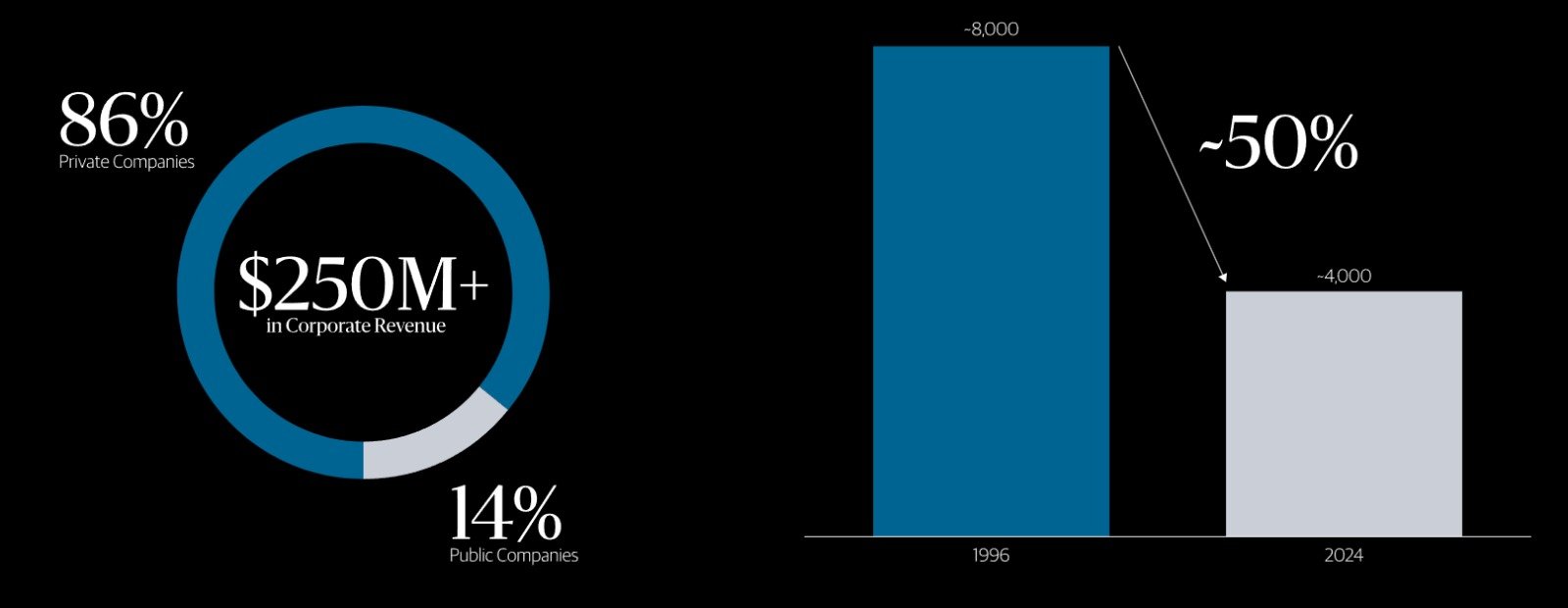
The universe of private equity (“PE”) is vast given that most companies globally are privately held. [ 1 ] Family offices and other institutional investors have maintained sizable PE allocations for decades, and more individual investors are following suit.
Private equity has outperformed stocks with lower volatility over the long run. [ 3 ] As a result, private equity can be a core portfolio building block for investors in search of diversification and enhanced performance.
These efforts create the potential for a higher return, but investors must trade off some liquidity.
What is Private Equity?
Talent Management Attract, develop, and retain top talent
Procurement Savings Leverage global scale, buying power
Brand Strategy Strategic management of brands, products, and services
“Go-to-Market” Strategy Identify areas of improvement
Technological Innovation Use advanced analytics to grow
Private Equity Historical Outperformance of Public Equities
Investing for the Long Run
Private Investment Opportunities Substantially Exceed Those in Public Markets
Private equity consists of investments in privately held companies, ranging from early-stage growth companies to large enterprises across every industry and geography. Private companies are a critical part of the global economy [ 1 ] and can take a longer-term orientation than the focus on share-price fluctuations of many public companies.
Private equity investors can help these businesses grow through active engagement and value creation strategies, including reshaping leadership, operations and financials.
Private Equity: A Core Allocation
Institutional investors have long made private equity a core part of their portfolios. Individual investor allocations to private equity have historically been limited, but new investment structures, including perpetual funds, are increasing access to the asset class.